

 English
 中文简体
中文简体 Español
 عربى
عربى
Power Quality Explained: Common Problems, Standards and Equipment Fixes
Admin 2026-09-04Content
- 1 What Power Quality Actually Measures
- 2 The Six Disturbances You Will Actually Meet
- 3 Where Poor Power Quality Comes From
- 4 What Poor Power Quality Costs You
- 5 The Standards That Define Acceptable
- 6 Sizing the Transformer for Real Loads
- 7 Switchgear, Coordination and Clean Data
- 8 A Sensible Order of Operations
- 9 The Bottom Line Before You Buy
A 400 kW compressor starts on the far side of the plant, the workshop lights dip for half a second, and three variable speed drives on the packaging line drop out together. Nothing is broken and no breaker has tripped on fault current, yet the line is down. That, in one sentence, is a power quality problem: the electricity arriving at your equipment briefly stopped matching what the equipment was designed to accept.
Power quality describes how closely the voltage, frequency and waveform of a supply conform to their specified values. When all three hold steady, motors run cool, drives stay online and meters read true. When they drift, you get nuisance trips, overheated neutrals, failed capacitor banks and production hours that never come back. Almost every power quality problem can be measured, traced to a source and corrected, and many of the decisive choices sit in the distribution equipment itself.
What Power Quality Actually Measures
Three quantities define it, and each has a tolerance band recognized by international standards. Keep all three inside their bands and the network is healthy; let one drift and the symptoms appear downstream.
Voltage magnitude
The supply should sit close to nominal. EN 50160 expects around 230 V held within 10 percent of nominal for nearly all of the week, and ANSI C84.1 keeps North American service voltage within roughly 5 percent. Habitual operation at the band edges shortens equipment life.
Frequency
Interconnected grids hold frequency extremely close to 50 or 60 Hz, typically within about 0.1 Hz, because thousands of generators share the burden. Islanded systems fed by gensets or limited renewable capacity swing wider, and sensitive drives and process controls notice.
Waveform
The ideal waveform is a clean sine wave. Distortion is expressed as total harmonic distortion, or THD, and it grows whenever non-linear loads draw current in pulses. EN 50160 caps voltage THD at 8 percent on low voltage networks.
The Six Disturbances You Will Actually Meet
Names matter when you file a complaint or write a specification. These six events cover most real-world power quality complaints, along with the way each usually announces itself.
| Disturbance | Typical symptom | Most common source |
|---|---|---|
| Voltage sag (dip) | Lights dim, contactors drop out, drives trip on DC bus undervoltage | Remote grid faults, large motor starting, transformer energizing |
| Voltage swell | Overvoltage alarms, stressed power supplies, blown lamps | Sudden load rejection, utility capacitor switching |
| Transient (impulse) | Unexplained electronic failures, damaged circuit boards | Lightning, switching of inductive loads |
| Harmonics | Transformer and motor hum, overheating neutrals, repeated capacitor failures | Variable speed drives, rectifiers, LED drivers, welders |
| Unbalance | Motor heating and vibration, higher losses, nuisance trips | Uneven single-phase loading, a blown fuse on one phase |
| Flicker | Visible lamp fluctuation and complaints from occupants | Arc furnaces, spot welders, frequent motor starting |
One week of monitoring usually reveals which two or three dominate at a given site, and that is where the budget should go first.
Where Poor Power Quality Comes From
From the grid upstream
Short circuits hundreds of meters or even kilometers away pull your voltage down for a few cycles until protection clears the fault. Lightning injects high-energy impulses and utility capacitor switching sends brief transients down the line. You cannot prevent these events, but you can decide how much of each one your installation tolerates.
From inside your own facility
Harmonic currents are almost always homegrown. Variable speed drives, DC power supplies, battery chargers, LED lighting and welders all draw current in pulses, and those pulses distort the voltage for every load downstream of the same transformer.
- Uneven distribution of single-phase loads creates unbalance and motor heating.
- Across-the-line starting of large motors produces local sags.
- Overloaded cables and loose terminations add voltage drop and heat.
- Inverter-based renewable generation exporting into a weak network raises background distortion.
The distinction matters: sags usually arrive from outside, while harmonics are usually self-inflicted. That tells you whether to open a discussion with your utility or with your own panel schedule.
What Poor Power Quality Costs You
The invoice rarely arrives labeled as a power quality cost. It shows up as downtime, premature replacement and wasted energy.
- Downtime: a sag lasting under a tenth of a second can trip an entire line. Many contactors release once voltage falls to roughly 70 percent of nominal, and drives often trip faster on DC bus undervoltage.
- Heating and aging: harmonic losses rise with the square of the current, heavy single-phase non-linear loads overload neutrals, and transformers and motors run hot. Even a few percent of voltage unbalance forces meaningful derating of induction motors.
- Early hardware failure: distorted currents are a leading cause of premature capacitor bank failure, and repeated transients degrade power supplies quietly until the day they fail.
- Compliance pressure: if the harmonic current you inject at the point of common coupling exceeds IEEE 519 limits, your utility can require corrective action at your expense.
One unplanned line stoppage usually costs more than the measurement campaign and the mitigation hardware that would have prevented it.
The Standards That Define Acceptable
Two questions settle most disagreements: what does the network operator enforce, and what should your specification demand? These documents answer both.
| Standard | What it governs |
|---|---|
| IEEE 519 | Harmonic voltage and current limits at the point of common coupling, with commonly cited values of 5 percent voltage THD and 3 percent for individual harmonics on 1 kV to 69 kV buses |
| EN 50160 | Voltage characteristics of public distribution networks in Europe, including a nominal 230 V held within 10 percent and an 8 percent THD ceiling for low voltage |
| ANSI C84.1 | Nominal system voltages and service voltage tolerance ranges used across North America |
| IEC 61000 series | Compatibility levels, immunity requirements and the test methods used to verify equipment behavior on disturbed supplies |
| IEEE 1159 | Definitions and duration categories for sags, swells and transients, so that monitoring reports share one language |
Sizing the Transformer for Real Loads
Harmonic currents produce no useful work, but they do produce heat, so a transformer sized only for its fundamental current runs hotter than the nameplate suggests. Where non-linear loads dominate, the practical responses are conservative sizing, genuine thermal data from the manufacturer and, in compact indoor installations, a dry-type unit whose construction suits the environment and simplifies fire protection planning.
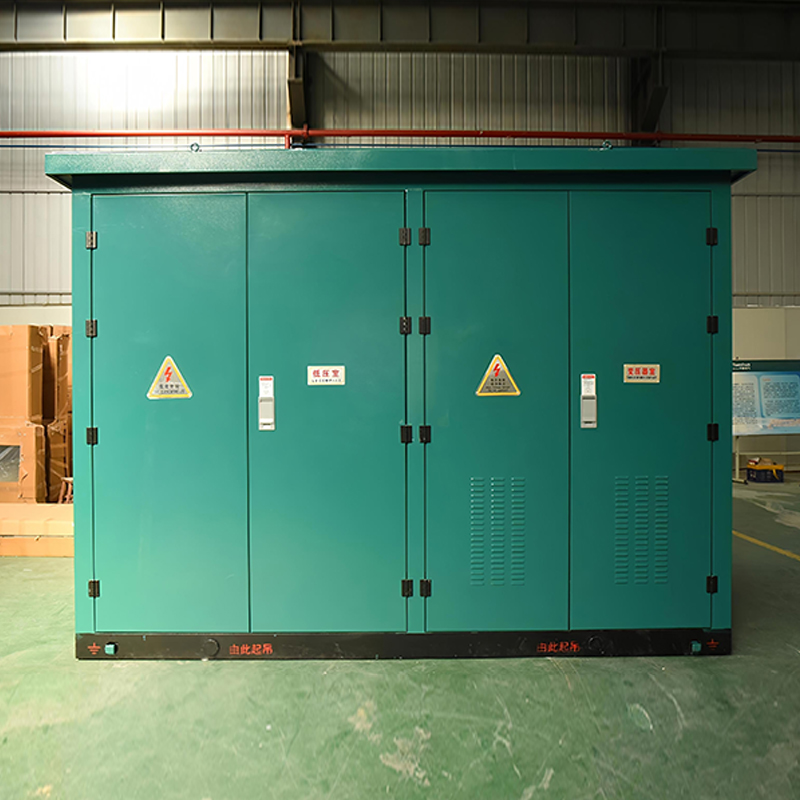 SCB13/SCB14 10kV Epoxy Resin Cast Dry-Type TransformersThese 10kV three-phase cast resin transformers, rated 630–2000kVA, suit indoor installations with non-linear loads. Oil-free, fire-resistant construction and optional enclosures support conservative thermal planning where harmonic heat is a concern.View Product →
Ask suppliers for temperature-rise figures measured under realistic load spectra rather than purely sinusoidal test conditions, and confirm insulation class and cooling method against your facility's actual harmonic content. For a plain-language grounding in the fundamentals, this overview of what type of equipment a transformer is covers the basics well.
Switchgear, Coordination and Clean Data
Between the transformer and the load sits the equipment that either contains a disturbance or spreads it. Metal-clad medium voltage switchgear, such as the withdrawable 12 kV KYN28A-12 pattern, provides tested short-circuit ratings, defined operating sequences and safe maintenance access, which is what turns a grid fault into a short restoration instead of a day of rebuilding.
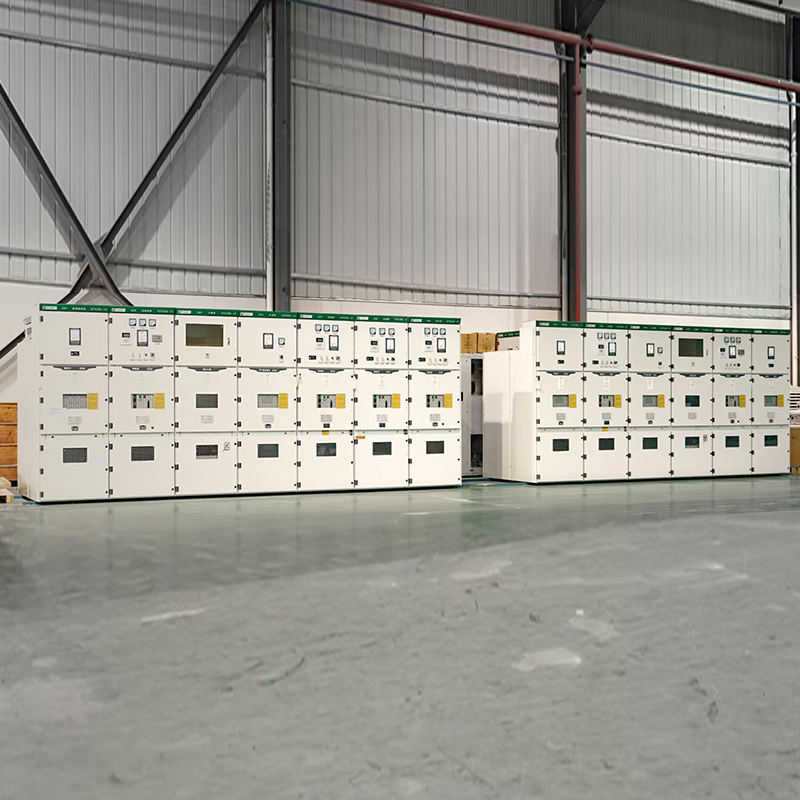 KYN28A-12 12kV Withdrawable Metal-Clad SwitchgearThis indoor armored 12kV switchgear offers tested short-circuit ratings, five-protection interlocks, and withdrawable breaker trolleys. Its compartmented design contains faults, enabling quick restoration and safe maintenance of medium-voltage distribution.View Product →
Protection coordination is a power quality tool in its own right: when relay and breaker settings are graded correctly, a downstream fault disconnects one feeder instead of blanking the whole board. On the low voltage side, layout does much of the work, since separate feeders for drives and welders keep polluted currents away from sensitive loads and give metering a meaningful point to measure.
A Sensible Order of Operations
Resist the urge to buy filters before you have data. The sequence below ends with proof rather than hope.
- Log before you spend: record voltage, THD, unbalance and event timestamps for at least one representative week, weekends included.
- Classify the findings against the standards above and separate upstream problems from self-generated ones.
- Fix the sources first: rebalance single-phase loads, move disturbing loads onto dedicated feeders and resize or replace overloaded equipment.
- Tighten coordination: verify breaker and relay settings so a single fault clears locally instead of cascading.
- Mitigate what remains: passive or active harmonic filters, surge protection and, for genuinely critical processes, a ride-through strategy sized from your own sag data.
- Re-measure and document the result against IEEE 519 or EN 50160 targets so the improvement is provable.
Step one lives or dies on instrumentation. Revenue-grade metering installed at the main boards records exactly the quantities listed above and keeps the evidence in one place.
 Power Metering Equipment for Low-Voltage DistributionSmart meters, power meters, and transmitters measure current, voltage, power, and energy at main boards. Revenue-grade metering provides the documented evidence needed to assess power quality tolerances and manage consumption effectively.View Product →
The Bottom Line Before You Buy
Power quality is neither a mystery nor a luxury; it is a set of measurable tolerances with documented limits and known fixes. Treat it as a specification when you evaluate distribution equipment: request harmonic and temperature-rise data, confirm certification such as CCC and ISO 9001, and insist on commissioning support that measures installed performance instead of assuming it.
If you are planning a new substation, upgrading an aging switchboard or chasing an unexplained trip, our engineering team welcomes the chance to review your single-line diagram and load list. Reach us through the contact page to start that conversation.
Clean power is cheaper than downtime. Measure first, specify carefully, and the rest of the network quietly rewards you for years.
For exclusive deals and latest offers, sign up by entering your email address below.

-
Please feel free to contact us if needed!
Contact Us -
Quick Links
Home About Us Products Applications News Contact -
Contact Us
nbtsdq@163.com +86-15757467313 +86-574-65800646 No. 1, Jiuzhou Road, Xiangshan County, Ningbo City, Zhejiang Province, China -
Get Touch
